Valuation Services

Liquidation Value vs Going Concern Value: Key Differences
Liquidation value estimates what a company's assets are worth if sold off during a shutdown, while going concern value reflects a business's worth as an ongoing operation generating future cash flow and goodwill.

Replacement Cost Method of Valuation Explained
The replacement cost method of valuation values an asset at today's cost to replace it with an equivalent, minus physical, functional and economic depreciation. It is used for machinery, property, insurance and financial reporting.

Monte Carlo Simulation in Valuation: How It Works
Monte Carlo simulation valuation runs a model thousands of times with sampled inputs to produce a value range with probabilities. Learn the six-step process, uses in DCF, 409A and ASC 820, a worked example and limits.

Real Options Valuation Explained: Formula, Types and Use Cases 2026
Real options valuation is a method that prices management's flexibility to expand, defer, abandon or switch an investment. It uses option pricing models to value choices that traditional DCF analysis ignores.

Sum-of-the-Parts Valuation: When and How to Use It
Sum of the parts valuation values each business segment separately, then adds them up. This guide covers the SOTP formula, when to use it, a worked three-segment example, the conglomerate discount, and the errors that distort results.
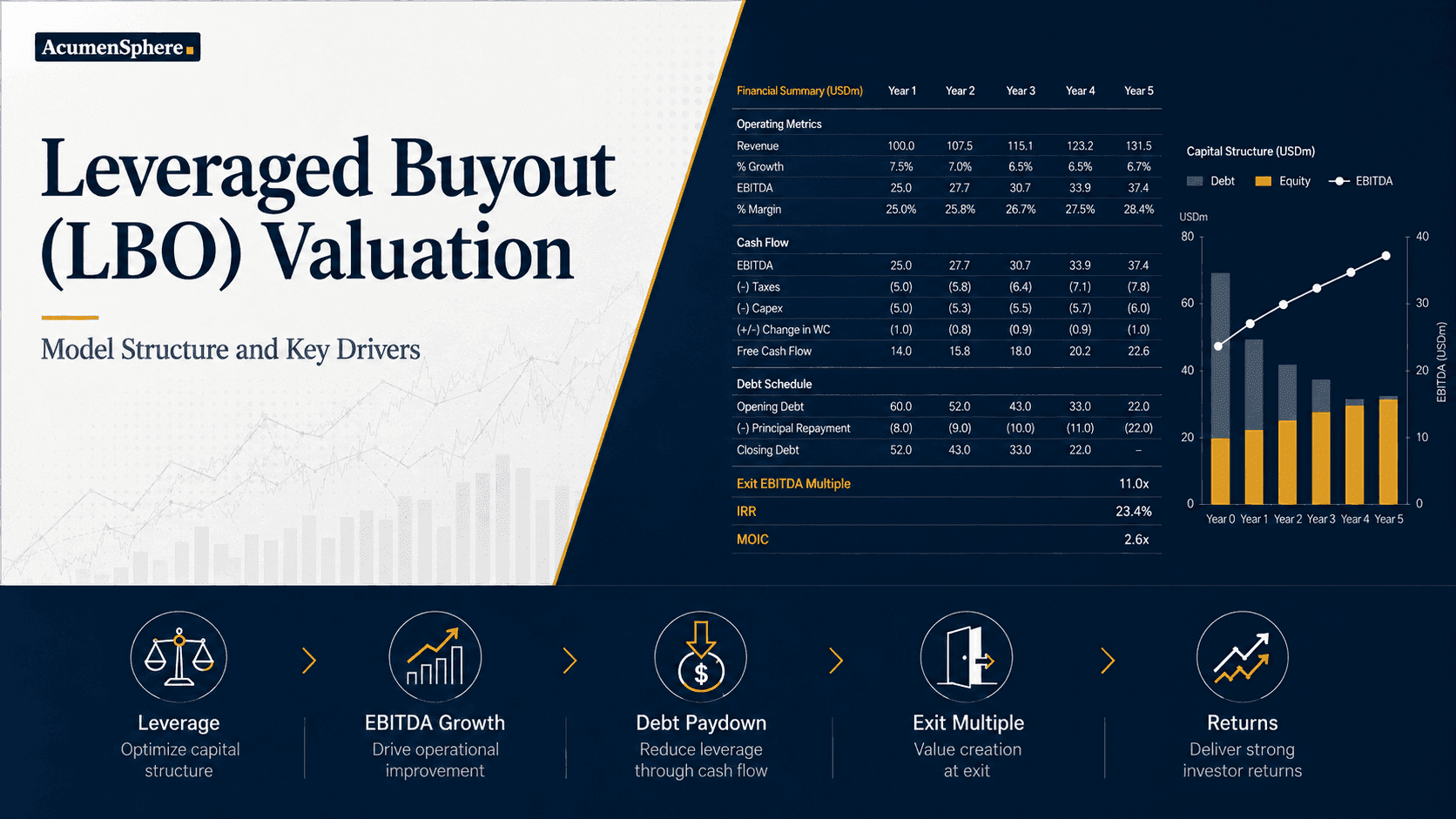
Leveraged Buyout (LBO) Valuation: Model Structure and Key Drivers
LBO valuation is the method used to price a company by working backward from a private equity sponsor's target return, based on the debt used to fund the deal and the cash flow available to repay it, rather than the company's standalone value.

Precedent Transaction Analysis: How It Works and Limitations
What acquirers have actually paid to buy control of similar companies, and how to turn that into a defensible valuation, including the control premium, the screening criteria, and where the method breaks down.

Comparable Company Analysis (CCA): Method, Steps and When It's Used
How comparable company analysis actually works: picking a genuine peer group, choosing the right multiples, and a full worked example showing how a range of values comes out the other end.

Liquidity Preference Theory: Meaning, Assumptions, Types and Importance
Keynes' liquidity preference theory, explained the way it's actually tested and used: the three motives for holding money, the theory's key assumptions, and why it still shapes the interest-rate environment behind every discount rate.

Valuation Opinion: What It Is, When It’s Required & What It Contains
What a valuation opinion actually is, when one is required, how it differs from a fairness or solvency opinion, and why who's paid what — and when — affects how much you can trust the conclusion.

Valuation Expert vs Financial Consultant: Key Differences
Valuation expert or financial consultant — what each one actually does, the credentials worth checking for (CVA, ASA, ABV, RICS), and which one your specific situation needs.

How to Read a Valuation Report: Key Sections, Assumptions and Red Flags
How to critically read a valuation report — the different report types (409A, DCF, portfolio, private placement, 11UA), a worked example of how one weak assumption nearly triples a conclusion, and the red flags to check.

Post-Money Valuation Explained: Formula, Examples and Its Impact on Startup Equity
Post-money valuation isn't one number. It's an equity number and an enterprise number, and they aren't the same.

Startup Valuation Methods: How Investors Value Pre-Revenue and Growth-Stage Startups
A pre-revenue startup has no cash flow to discount. Here is what investors calculate instead.

LeadSquared Valuation and How SaaS Companies Are Valued
What's actually known about LeadSquared's funding and valuation history — and the multiples, methods and benchmarks used to value any SaaS company properly.

Discount for Lack of Marketability (DLOM): Calculation, Formula
The Chaffe, Finnerty and Longstaff DLOM models worked with real, verified numbers — plus what the Stout DLOM Calculator actually does, and how appraisers choose between them.

Intangible Assets: Definition, Examples, Types, Valuation
Intangible assets defined, classified and valued — plus a worked example showing why unrecognized intangibles quietly overstate a company's reported return on net operating assets.

Business Valuation Methods: Approaches
The three valuation approaches applied to one company, producing three answers 50% apart — and the reconciliation that turns them into a single concluded value.
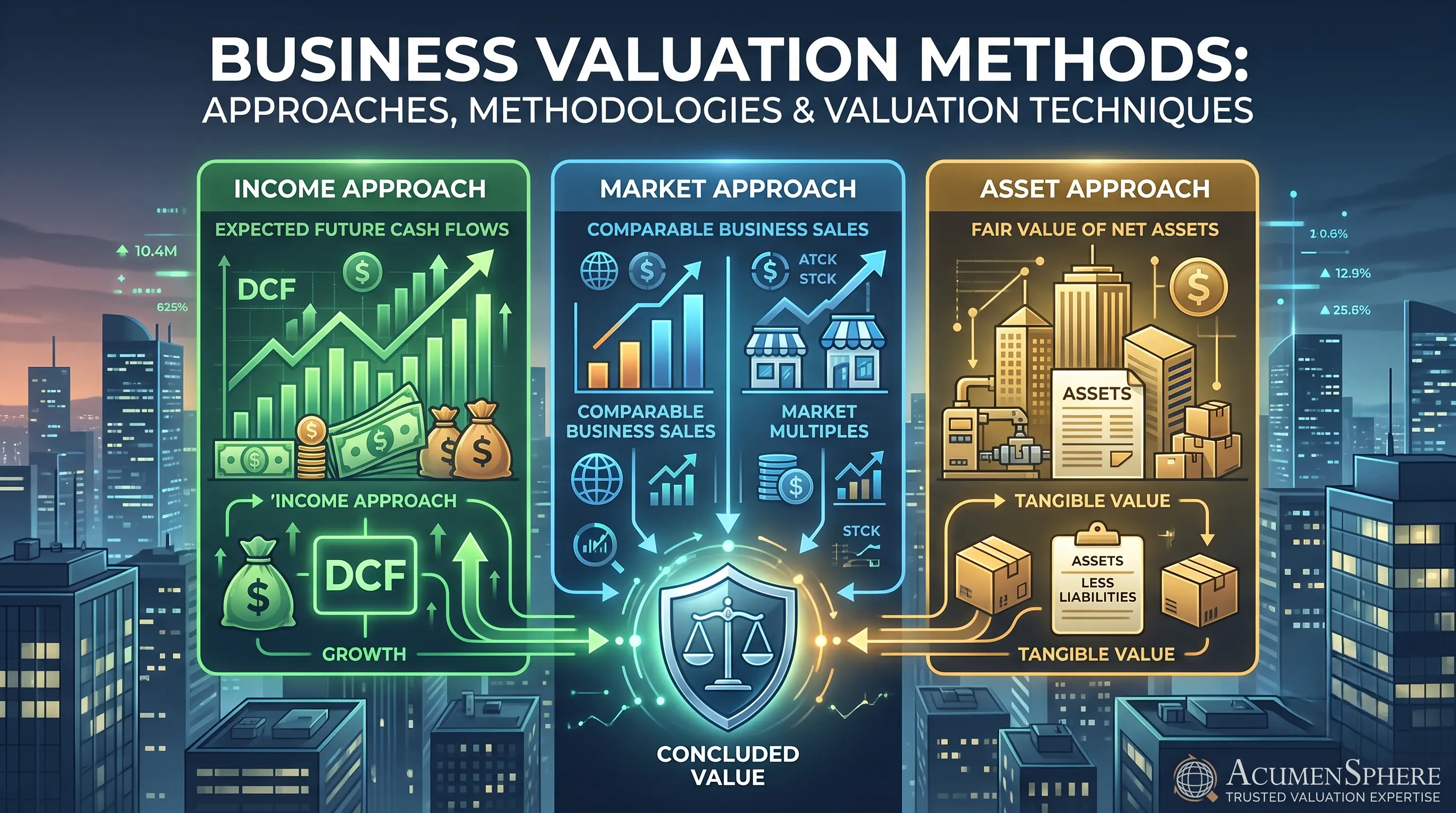
Business Valuation Methods: Approaches, Methodologies and Valuation Techniques
The three valuation approaches applied to one company, producing three answers 50% apart — and the reconciliation that turns them into a single concluded value.
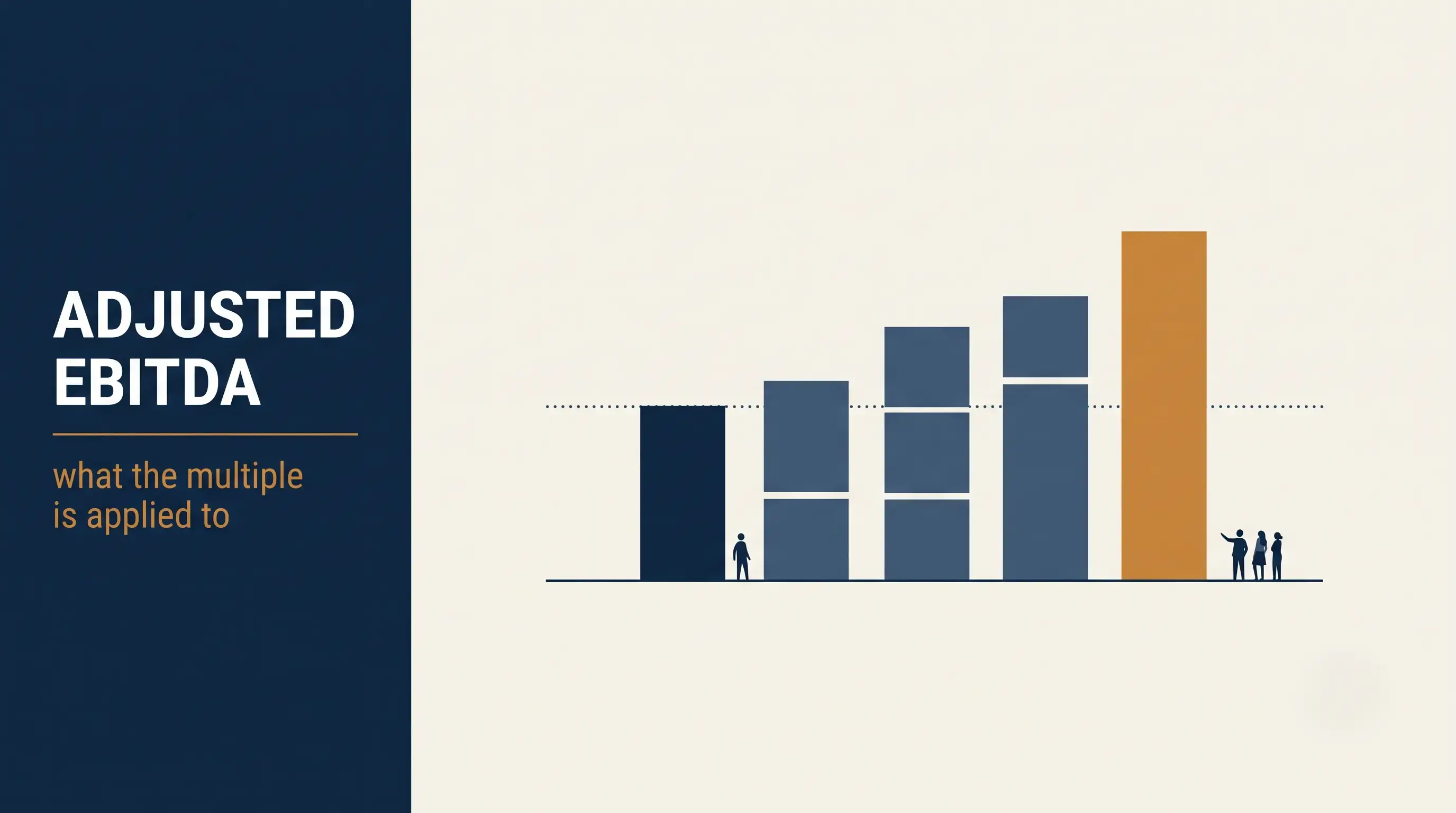
EBITDA: Meaning, Formula, Calculation, Adjusted EBITDA and Examples
How EBITDA is calculated, how Adjusted EBITDA is built from an add-back schedule, and why the items a buyer rejects are worth more than most owners realize once the multiple is applied.

Discounted Cash Flow (DCF) Valuation: Formula, Model, Calculation and How It Works
A complete discounted cash flow calculation, carried from five-year projections through a WACC build-up and terminal value to a value per share — including the sensitivity range most published examples leave out.

Trade Secrets and Intellectual Property: Types, Business Value, Protection and Examples
What qualifies as a trade secret, how the choice between patenting and secrecy actually gets made, and what the asset is worth — with a worked valuation that produces a figure, not a principle.

WACC (Weighted Average Cost of Capital): Formula, Calculation, DCF and Business Valuation
A full WACC build, from risk-free rate to final figure — then the same company run through CAPM and the build-up method, showing why private company valuations use a different rate.

Net Asset Value (NAV): Definition, Formula, Calculation and Example
The NAV formula, and two worked calculations that use it — one for a fund unit, and one for a company, where book value and adjusted net asset value differ by 62%.

Business Appraisal vs Business Valuation: Key Differences, Methods and Uses
Business appraisal and business valuation describe the same work. What actually changes the number is the credential, the governing standard and the standard of value applied — shown here as a 57% spread on a single company.

Waterfall Analysis: Meaning, Types, Examples and Applications in Finance
A worked example of how exit proceeds actually reach shareholders. Three scenarios on the same cap table show why common stock can own half a company and still receive nothing, and where the breakpoints that decide it sit.

Corporate Valuation for Estate, Divorce and Litigation: When Courts and the IRS Set the Standard
Explore corporate valuation for estate, divorce and litigation matters, covering valuation standards, dates, approaches, IRS considerations, ownership interests and key factors attorneys should understand when assessing business value.

Gordon Growth Model vs Exit Multiple Method
The Gordon Growth Model and Exit Multiple Method are the two most commonly used approaches for calculating terminal value in a Discounted Cash Flow valuation.

What Is Inside a Business Valuation Report? Sections, Standards and Red Flags to Check
Discover what a business valuation report includes, from key sections and valuation methods to audit requirements and red flags. Learn how valuation experts create transparent reports for fundraising, compliance and strategic decisions.

Startup Valuation Methods: How Startups Are Valued at Every Stage (Pre-Seed to Series C)
Understand startup valuation methods from pre-seed to Series C. Learn how startups are valued, key metrics investors consider, fundraising valuation approaches, AI-based valuation and how founders can prepare for investment decisions.

Goodwill Valuation: How Goodwill Is Calculated, Valued and Tested for Impairment (ASC 350)
Learn how goodwill valuation works, how goodwill is calculated, and how ASC 350 impairment testing helps identify and measure potential goodwill impairment.

Pre-Money vs Post-Money Valuation: Formula, Difference & Examples
When a startup raises capital, one of the first questions founders and investors discuss is valuation. But valuation during fundraising can be confusing because the same company may be described using two different numbers: pre-money valuation and post-money valuation.

Top Factors Affecting Business Valuation: Complete Guide
A practical guide to the key factors that drive business valuation helping you make informed decisions in fundraising, M&A, and financial planning.

Valuation for Mergers and Acquisitions: What Stakeholders Look For
Not every deal that looks attractive on paper holds up under valuation scrutiny. In mergers and acquisitions (M&A), buyers focus on testing assumptions, validating numbers, and identifying risks before committing capital.

DCF Valuation: A Step-by-Step Guide to Calculating Business Value
DCF valuation estimates a business’s true worth by converting future cash flows into present value. It offers a structured approach with clear assumptions, formulas, and practical use in real-world valuation.

Black-Scholes Model: Formula, Assumptions, and Calculation Explained
If someone recently changed your content on this page or you're rebuilding from a ranking drop, the fix starts here. The Black-Scholes model is one of the most searched financial topics in professional finance — and one of the most poorly explained. This article covers the formula, all six assumptions (including the often-misunderstood no transaction costs and continuous trading assumptions), a worked calculation, and how the model is applied in ESOP and 409A valuations.

Gordon Growth Model Explained: Valuation Formula and Uses 2026
The Gordon Growth Model (GGM) is a valuation method used to estimate a company’s value based on cash flows expected to grow at a constant rate indefinitely. It is commonly used in Discounted Cash Flow (DCF) valuation to calculate terminal value. Gordon Growth Model Formula: Value = Cash Flow₁ / (Discount Rate − Growth Rate) Uses: The model is mainly used in DCF valuation, business valuation, 409A valuation, and investment analysis for mature companies with stable long-term growth.

Brand Equity vs Brand Value: Measuring Your Brand’s True Worth
Every successful business invests heavily in building a brand through design, advertising, and customer experience. Yet, many organizations fail to quantify what that brand is actually worth. In financial terms, your brand can be one of your most valuable intangible assets. Understanding the difference between brand equity and brand value helps you connect what people feel about your business with what that perception is worth on your balance sheet. For companies in the United States, this understanding is not only strategic, it’s also essential for compliance with US GAAP valuation standards such as ASC 805 (Business Combinations), ASC 350 (Intangibles—Goodwill and Other), and ASC 820 (Fair Value Measurement). This article explores the key differences between brand equity and brand value, their importance in financial reporting, and how professional valuation helps translate brand perception into measurable business worth.

Understanding Business Valuation Types: A Strategic Guide
Business valuation plays a key role in shaping strategic choices across the corporate lifecycle.

ASC 350: When Do Companies Need Impairment Testing
ASC 350 guides companies in valuing intangible assets like goodwill, patents, and brands. It requires annual and event-based impairment testing when factors like market decline or losses indicate reduced value.

Why ASC 820 Valuation Matters for Compliance & Executive Decision-Making?
ASC 820 defines fair value under US GAAP, guiding how assets and liabilities are measured and disclosed. Beyond compliance, it supports transparency, risk assessment, capital allocation, and strategic decision-making across businesses.